Showing posts with label Graham Abra. Show all posts

The Brave New World of Renal ACOs

This past week CMS announced the formation of a new form of payment and service delivery for patients with ESRD - the ESRD Seamless Care Organization (ESCO) - essentially an ACO specifically and exclusively for individuals with ESRD.

The basic guts of the model require that at least a dialysis provider, nephrologist and one other Medicare provider be involved.  The "one other Medicare provider" bit is likely meant to capture the obvious need that dialysis patients have for a multitude of services beyond dialysis and renal specific care.  The ESCO has to have at least 500 members all of whom need to be on dialysis - patients with functional kidney transplants are not eligible.

The hypothesis behind ESCOs is that an alignment of financial incentives with clinical care goals will produce superior outcomes and patient experience at lower per capita health spend than traditional fee for service Medicare where providers are rewarded for the volume of services they deliver.   The 10,000 foot view of "alignment of financial incentives" is that ESCOs will be able to earn a fraction of savings when health care spending is lower than a pre-determined base line and will be at risk for a fraction of overruns when spending is higher.

In order to avoid rationing of high value services, the ESCO model requires that participating groups report and achieve a defined set of quality metrics in order to earn their fraction of savings.  These cross a wide variety of areas including preventative health, chronic disease management, care coordination, patient safety, patient and caregiver experience, and patient quality of life.

The slide deck below from the CMS open door forum forum this past week digs a bit deeper into the details.


Pearls for Boards

1) Surreptitious vomiting or diuretic abuse - metabolic alkalosis, Laxative abuse - non-gap metabolic acidosis.

2) Aquaporin 2 -  apical membrane of collecting duct, Aquaporins 3 and 4 - basolateral membrane of collecting duct, Aquaporin 1 - proximal tubule.

3)  Hemodialysis access rule of 6s: 6 weeks after the AV fistula has been placed, the fistula should:
1) be able to support a blood flow of 600 ml/min 2) be at a maximum of 6mm from the surface 3) have a diameter greater than 6mm.

4) Chronic lead exposure: 1) Interstitial nephritis 2) Gout 3) HTN

5) Calcineurin inhibitors, key differences - Tacrolimus: hair loss and higher rates of NODAT. Cyclosporin: hair growth and gum hyperplasia.

Phosphorous Binder Equivalent Dose

Ever encountered this situation?  You're going about your daily business and discover that one of your patients on hemodialysis has an elevated phosphorous.

You skim through the list of prerequisites and see that yes, the nutritionist has been by to review dietary sources of phosphorous, the dialysis nurse has checked in on adherence to phosphorous binding medications, there's no activated vitamin D on the med list and you've explored increasing the frequency of dialysis or moving to extended nocturnal with the patient before and it's not in the cards.

Is there anything rational that can be done with the phosphorous binder dose to improve phosphorous control?  Thanks to the good work of the folks at the Frequent Hemodialysis Network (FHN) trial the answer is yes.

During the trial the investigators faced the question of whether or not changes or substitutions in multi-binder regimens represented increases or decreases in phosphorous binding capacity.  In order to answer this question the investigators combed through stool and urinary phosphorous recovery studies of individuals given various phosphate binders.   In these trials individuals were given test meals with known amounts of phosphorous.  The amount of free phosphorous appearing in the stool or urine was measured with and without binders with the difference being considered the amount of phosphorous being bound to binders in the gut.

With this information in hand the FHN group additionally looked at parallel group trials were patients on dialysis were given one of two binders and then had their doses titrated to equal serum phosphorous levels.  What emerged was a picture of the relative phosphorous binding capacity of various common binders.  Below is a table of commonly used phosphorous binders and the derived phosphate binder equivalent doses.


As you can see, all the phosphate binder equivalent doses are referenced to 1g of calcium carbonate.  So as an example, 5 tabs of 800mg sevelamer carbonate binds an equivalent amount of phosphorous (5 times 0.6 = 3) to 3 tabs of 500mg lanthanum carbonate (3 times 1.0 = 3).

Now, where ones phosphorous should ideally be is unclear (as nicely pointed out over at PBF a while back) as is the choice of agent (unless you count the realization that chronic aluminum binders where a bad deal).

Both the KDOQI and KDIGO guidelines don't endorse any one class binders over any other (again, excluding aluminum) though KDIGO gives a "2C = we suggest based on low grade evidence" that calcium based binders be restricted in the presence of arterial calcification, adynamic bone disease or persistently low PTH.  KDOQI, based on expert opinion, suggests that the amount of calcium from binders be limited to 1.5g/day (there are 200mg of calcium in a 500mg calcium carbonate tab and 169mg of calcium in a 667mg tab of calcium acetate).

Pearls for Boards

1) In diabetic glomerular disease you can see linear staining of GBMs with IgG, Kappa and Lambda.

2) The three C3 immunoflourescence patterns of post strep GN 1) Starry Sky (most common) 2) Garland (less common) 3) Mesangial (resolving Starry Sky).

3) Troubles from Star Fruit 1) Seizures in dialysis patients 2) Hyperoxaluria -> AKI, Nephrocalcinosis, and Calcium Oxalate stones.

4) Avoiding aminoglycoside toxicity - reduce the dose frequency.

5) Membranous risk categories by proteinuria and renal function: Low - less than 4 g/day, normal fxn, Med - 4-8g/day normal fxn, High - more than 8g/day, abnormal fxn.

Pearls for Boards

1) Icodextrin sometimes causes a desquamating rash on the palms and soles.

2) Sirolimus, five side effects to watch 1) Poor wound healing 2) Lung toxicity 3) Hyperlipidemia 4) Proteinuria 5) Anemia/Thrombocytopenia.

3) Classic EM finding in post infectious GN: Large subepithelial hump shaped deposits.

4) Conivaptan is both a V2 and V1a antagonist - as such, contraindicated in cirrhosis were V1a agonists are used for variceal bleeding.

5) Eosinophilic peritonitis is not uncommon when breaking in a new PD catheter.

Pearls for Boards

1) Monoclonal Immunoglobulin Deposition Disease breakdown - 80 to 90% LCDD, 10 to 20% LHCDD, <5% HCDD.

2) Small studies suggest tamoxifen and steroids may be of benefit in management of Encapsulating Peritoneal Sclerosis in patients on PD.

3) Sodium restriction helps lower the risk of calcium nephrolithiasis by increasing proximal tubular uptake of sodium and subsequently calcium.

4) The age at presentation of anti-GBM disease has a bimodal distribution with a male predominance in younger patients and a female predominance in older patients.  More severe disease with lung involvement is more common in young patients while isolated GN is more common in older patients.

5) Hypothermia leads to potassium shift into cells and serum hypokalemia.

Conference Review: Home Dialysis University

It doesn't take much to get me to take a trip to San Diego so when the opportunity came up to attend this year's Home Dialysis University conference I booked my flight.  Having lived in San Diego for many years prior to moving to the Bay Area I took the opportunity to both check out this great conference and stay and visit with old friends.

The conference (formerly known as Peritoneal Dialysis University) now has significant content going over home hemodialysis therapies with much of this being delivered by Brent Miller who was one of the FHN daily investigators and part of the ongoing FREEDOM study.

The conference registration and up to $350 in hotel and travel are covered for fellows by a grant from the International Society of Peritoneal Dialysis.  The conference and accommodations were at the Westgate Hotel in the Gaslamp district.  Great location and high marks for tasty breakfast, lunch and frequent snacks (all at no additional cost!)

Conference size was small, under 20 people so lots of opportunity to interact with the faculty and other attendees. Also a short conference, one full day and two half days.

John Burkart from Wake Forest gives a great lecture on how PD and HD work in terms of small and other solute clearance and reviews the uses and limitations of Kt/V.  He also gives a very practical lecture on the financial considerations related to home dialysis.  Anjali Saxena (one of my attendings who is the PD director down at the Stanford affiliated Santa Clara Valley Medical Center) covers PD access issues, the challenges that face the long-term PD patient and the infrastructure requirements for starting your own home unit.  Joanne Bargman from Toronto does some great case based discussions surrounding commonly encountered PD issues.

One of the highlights is the hands-on demonstration session were home dialysis RNs actually do a walk through with a PD cycler and a NxStage machine. Very informative.

An area where many fellows unfortunately have limited exposure is the nuances of the dialysis prescription writing for the NxStage system.  Brent Miller gives a really nice talk going over the details of this.  Lots of nice compare and contrast examples to conventional HD to put things in a more familiar context.

At least as of this writing, they haven't announced when the 2013 fellows conferences are going to be held so stay tuned to their website for dates.  In past years they've had sessions in several locations on several different dates so hopefully you'll find something that will fit your schedule.

I again tried my best to keep up a solid twitter feed of interesting points for RFN which you can find here with all the tweets indexed under #HomeDialysisU.

Pearls for Boards

1) Alkaline urine encourages calcium phosphate nephrolithiasis. Three predisposing factors to watch for - 1) distal RTAs 2) Acetazolamide 3) Topiramate.

2) IgA nephropathy, common in Asians and Native Americans, rare in African Americans.

3) Stay alert for triphasic pattern of water disturbance post neurosurgery or cerebral trauma - hypernatremia, hyponatremia and finally hypernatremia.

4) Long term PPI use can result in hypomagnesemia, hypocalcemia and hypokalemia.

5) Renal Malignancy Syndromes: Tuberous sclerosis - Angiomyolipomas and rarely RCC, Von Hippel Lindau - RCC and Pheo, Birt Hogg Dube Syndrome - chromophobe RCC.

Pearls for Boards

1) Topiramate - Watch for non-gap acidosis, nephrolithiasis and hyperammonemia.

2) Jak2 - the intracellular kinase activated by the binding of Epo to the Epo receptor.

3) Live vaccines are contraindicated in kidney transplant recipients – these include MMR, Varicella, Yellow fever and BCG.

4) Liddle's, the opposite of Pseudohypoaldosteronism Type I - Gitelman's, the opposite of Pseudohypoaldosteronism Type II (also known as Gordon's syndrome).

5) Myeloma cast nephropathy - distal intratubular casts, Light Chain Fanconi Syndrome - proximal intracellular crystals.

Differentiation Syndrome

I was recently rounding on a gentleman in the ICU with acute promyelocytic leukemia (APL) who, after starting induction therapy with tretinoin (all-trans retinoic acid), developed fever, hypotension, new pulmonary infiltrates with associated respiratory failure and AKI requiring dialysis.  It was suspected that he had developed the differentiation syndrome.

Recall that APL is a variant of acute myeloid leukemia (AML).  APL is typically defined by the presence of a fusion gene linking the retinoic acid receptor alpha gene on chromosome 17 with the promyelocytic leukemia gene on chromosome 15.  Untreated, APL is the most malignant form of AML.  Luckily, it is highly responsive to therapy which usually includes tretinoin.  Tretinoin allows the terminal differentiation of malignant promyelocytes to mature neutrophils.

However, therapy with tretinoin can lead to the differentiation syndrome which was previously known (and posted about by Nate) as retinoic acid syndrome.  Symptoms include fever, edema, pulmonary infiltrates, respiratory failure, hypotension, rash, pleural and pericardial effusions, hepatic dysfunction and AKI.  The differentiation syndrome occurs in around a quarter of patients treated with tretinoin and is thought to be a cytokine release syndrome but autopsy series have also shown infiltration of various organs including the kidneys with myeloid cells.  An interesting case report in AJKD details the enlargement and subsequent return to a more normal size of the kidneys of a patient who developed the differentiation syndrome and AKI which one could speculate occurred as the parenchyma was filled then cleared of cells.

Treatment of the syndrome involves dexamethasone and in some cases holding the tretinoin.  The team caring for my patient had given him steroids and briefly held the tretinoin while providing supportive ICU care with vasopressors, mechanical ventilation and broad antibiotics while cultures were cooking. The infectious workup came back negative his overall status improved, and within a few days he was able to come off of dialysis.

Photo: Jellyfish at the Monterey Bay Aquarium.


Pearls for Boards

1) Isopropyl alcohol does NOT cause an elevated anion gap acidosis, retinal toxicity (as does methanol), or renal failure (as does ethylene glycol).

2) Fibril diameter of the more common fibrillary diseases - Amyloid, Fibrillary GN, and Immunotactoid GP - is correlated with their position in the alphabet - (A= 8-12nm, F= 16-24nm, I= >30nm).

3) Drug induced ANCA disease - 3 to watch - propylthiouracil, hydralazine and minocycline.

4) The classic EM finding in Hereditary Nephritis is longitudinal splitting of the lamina densa of the GBM producing a laminated or "basket weave" appearance.

5) In individuals 40 years of age or older with a positive family history of ADPKD, a finding of zero or one renal cysts excludes the disease with a negative predictive value of 100%.

Nephrology Boards Study Strategy Post-Mortem

So after many months and a few intensive weeks of study the nephrology boards are now in the record books and I thought I'd examine what worked and didn't work in my study efforts.  If you're part of the board police, not to worry, no board content specific information will be shared here.

I started by taking a look at what Matt had previously written, including our own reader poll results about studying for the boards here on RFN.  Armed with this I, along with a couple other fellows, decided to use ASN board review course lecture notes, videos and questions as our core material.

We used the 2011 materials, I would have liked to have attended the live course but unfortunately was unable (and as Matt mentions, the all in cost of travel, hotel and course is high).  What I quickly re-learned as I watched the lecture videos (and I should have remembered from med school) is that I'm terrible at retaining things presented in lecture format.  While my colleagues were happily jotting down notes and remembering things, I was dozing off and wasting hours, having to re-visit what the heck was going on.

I switched over to a more active strategy of doing questions.  I used the questions available from the ASN board review course, NephSap (which has a huge bank of questions and answers) and those available through The Kidney Doctor.  I would do a question and then review each answer choice using UpToDate and my trusty Mass Gen Pocket Medicine 3rd edition from residency (which I was shocked to learn is now on it's 4th edition! I still have a battered and abused blue 1st edition from med school :).

I periodically joined up with my co-fellows using Google Hangout (which is free) to discuss broad sections of the ASN board review and practice questions.  Being interactive with others helped as it challenged me to be able to explain and articulate things which sometimes I wasn't crystal clear on and I picked up details that others had recognized and I had missed.

I occasionally dipped into Clinical Physiology of Acid-Base and Electrolyte Disorders by Rose and Treatment of Primary GN by Ponticelli and Glassock but for the most part I stuck with UpToDate due to the speed and ease of finding things.

Matt mentions he was disappointed with NephSap questions but I actually thought they were pretty good, particularly older versions and the Core Knowledge questions.  As board content experiences a lag between emergence in the literature and making it to the test, the past year or so of stuff generally isn't represented while stuff from a year or two before is starting to make it in.  The Pathology NephSap is particularly good and I would say a must review for path images.

The test is a now a bit longer for first time test takers than Matt mentions and now consists of four 60 question blocks.  I took a break after each section to clear my head and use the restroom and also took a break for lunch after the first two sections.  It's a long day, so pacing is key.

A final note (and shameless piece of self and RFN team promotion) is that RFN is a great resource!  Our new and archived content are a wealth of board review pearls and resources.  Best of luck in your own board review efforts and for those who have taken the test, let us know in the comments what worked and didn't work for you.

Hawaii and Population Management

How familiar are the following scenarios to you?

You're in clinic and have just seen a 69 year old man with a longstanding history of hypertension.  He has been referred by his internist to nephrology for an eGFR of 51 ml/min/m2.  He has a bland urinalysis, an unremarkable renal ultrasound and a urine microalbumin to creatinine ratio of 20 mg/g. The patient and his internist have his blood pressure under good control and have addressed other modifiable cardiovascular risk factors.

You've seen this case a million times, right?

How about this one...

You are called to the Emergency Department to see a 51 year old morbidly obese female with a longstanding history of type 2 diabetes and hypertension who has just presented after several weeks of fatigue and pruritis now accompanied by nausea and vomiting.  Her labs show anemia, hyperphosphatemia, hypocalcemia, acidosis, hyperkalemia and marked uremia.  A subsequent renal ultrasound shows small echogenic kidneys.  During the hospitalization she begins maintenance dialysis with a tunneled catheter with a plan for her to continue in-center dialysis 3 times a week on discharge. 

The patient had never seen a nephrologist prior to her hospitalization.

Sadly, this case is familiar too, right?

The two cases above highlight the over and underutilization of nephrology resources in our current care system.  Individuals like the 69 year old man in the first scenario gain little value from a visit to the nephrologist.  The risk of him every progressing to need for renal replacement is incredibly low and the services which he needs (CV risk factor control) are competently provided by his internist.

In contrast, the woman in the second scenario is representative of some 40% of patients who start dialysis today who have never seen a nephrologist prior to beginning renal replacement.   Only 25% have seen a nephrologist for at least year prior to ESRD.  Patients like the woman in the scenario would clearly benefit from disease progression delay strategies, modality education (home, center, transplant) along with appropriate preemptive dialysis access placement (AVF, AVG or PD catheter - depending on modality choice) - all services that nephrology provides.

In light of the above it's encouraging to see the ongoing efforts of organizations like Kaiser Permanente (KP) Hawaii who recently published more results from their experience with proactive population management.

In their system, an electronic tool sweeps the electronic medical records of the entire KP Hawaii population monthly for two basic parameters: eGFR and proteinuria.  Patients are divided into high and low risk groups for progression to need for renal replacement.  A nephrologist reviews the list regularly and proactively reaches out to primary care physicians to bring unrefereed high risk patients into nephrology care.  The patients at lower risk remain or return to primary care with remote physician-to-physician mentoring from the nephrologist.

In an initial report, their system was associated with an increase in the fraction of patients starting dialysis with a mature AVF (18% vs 36%), the fraction beginning dialysis as outpatients (35% vs 56%) and a higher proportion of new referrals consisting of high risk patients (16% vs 35%) and a lower proportion of patients at low risk (50% vs 30%).  There was a nice shift towards dedicating more nephrology new referral effort towards individuals who theoretically derive the most benefit from it with a downstream improvement in dialysis specific outcomes.  As this was a pre- to post- intervention comparison there are the usual caveats about whether there was a change in the population or some other concurrent change that contributed to the shifts in outcome.

In the followup report a smaller portion of patients showed progressive CKD when they were matched by propensity score to a historic cohort.  Although this may have been in part due to improvements in management of blood pressure and proteinuria in the primary care setting through remote nephrology mentoring I have to imagine that the internal blood pressure goal and education initiatives mentioned in the discussion played a substantial role.

Despite the weaknesses of the above studies the idea of proactive risk segmentation of a CKD population with appropriate application of nephrology resources is a highly appealing one.  We have only just scratched the surface of how to incorporate information technology into medical practice and efforts like the above to leverage the data contained within the electronic medical record are a way forward.

Myeloma Cast Nephropathy: New treatment possibilities

There are a laundry list of renal complications in multiple myeloma that have been previous reviewed on RFN.  Myeloma cast nephropathy is one of the most frequent, being found in approximately a third of patients in autopsy series.  Acute kidney injury is a common presentation of myeloma cast nephropathy with a variable amount of proteinuria.  As a tubular interstitial lesion with intact filtration barrier lower levels of albuminuria are typically present however large amounts of serum free light chains can be present leading to the classic findings of a negative urine dipstick (which detects albumin) with high levels of proteinuria by quantitative evaluation (stay frosty medical students, your intern is just itching to pimp you on this one).

On light microscopy diffuse tubular damage resembling ATN is seen along with distinctive distal tubular casts (in contrast to light chain fanconi syndrome where intracellular proximal tubular deposits are seen).  These casts often have sharp edges, a tendency to fracture (image on the left) and frequently have adherent neutrophils, monocytes or multinucleated giant cells around their periphery (image on the right).

Two papers from a group in Alabama shed light on the mechanism of formation of these casts and new potential treatment strategies.  It has long been known that the casts are composed of light chains bound to Tamm-Horsfall protein.  What the group first showed is that the CDR3 region on free light chains is the critical determinant of the binding with Tamm-Horsfall protein.

In their more recent paper, they report the development of a competitive inhibitor of the light chain Tamm-Horsfall protein interaction by blocking the Tamm-Horsfall protein binding site.  In a rodent model, in which human serum from patients with multiple myeloma was used to induce myeloma cast nephropathy they demonstrate the ability of the inhibitor to prevent both the histologic changes of myeloma cast nephropathy as well as AKI.

The inhibitor was infused just four hours after the serum containing light chains so future studies will need to examine situations that more closely mimic human disease in which presentation to care is delayed for much longer periods of time.  Despite this, the study adds to our understanding of the mechanisms on AKI in patients with myeloma casts nephropathy and provides a new avenue for investigation of treatment of renal disease in patients with myeloma casts nephropathy independent of chemotherapy.

Images from the recent NephSap Pathology edition.

Conference Review: Renal Biopsy in Medical Diseases of the Kidneys

I'm not a huge conference goer.   I've been to ASN a few times and have made a brief appearance at the Advanced Nephrology for the Consultant down in San Diego but otherwise haven't seen much of the conference circuit.  But when I got the Columbia flyer for the Renal Biopsy in Medical Diseases of the Kidneys a few years ago I knew it was going to be something I'd have to eventually check out.  It features the core of the GN clinical and pathology brain trust lecturing on what they know best: what GNs look like and how to manage them.  Falk and Jennete on ANCA, Appel and D'Agati on SLE, Rennke on, well, anything.  So this summer I finally got myself organized and funded and took the trip out to Manhattan to see the show.

First, a few general comments.  Staying in Manhattan is expensive.  Like $400 a night expensive.  The conference had a block of rooms reserved at hotel called the Lucerne for $200 a night.  I procrastinated and called the hotel after the deadline listed in the flyer and was politely told that all the rooms were gone and I could now book one for $440 a night if I was interested.  I declined and luckily had a family member take mercy on me and allowed me to stay with them on short notice.  If that hadn't come through I was ready to book a room through Airbnb which, if you haven't used it, is a cool site where you can find locals renting out space in their homes for cheap.

Second, it is hot and humid in Manhattan in the summer. Crazy hot. Bring wardrobe accordingly. I scuttled between air conditioning on the subway, lecture hall and my hosts place the whole week (I know, soft Californian behavior).

Third, take advantage and see Manhattan. I channeled my inner intern and skimped on sleep to hit the conference then experience the city.  Well worth it.

As for the conference it is certainly one of the best I've ever been to.  It's truly education focused, the talks are given in series rather than parallel like some of the big conferences so you're never at risk for missing anything.  The speakers are, for the most part, amazingly clear and avoid the common sin of nerding out on their own particular pet projects but rather focus on big picture relevance.

It's fun watching the older and younger members of the team interact as they clearly like each other and have a great back and forth.  You also get a sense of how some of the younger faculty like Glenn Markowitz, Andrew Bomback and Leal Herlitz are coming into their own and making their marks on the GN world.

The group aren't afraid to give their opinions when it gets to the grey areas.  Who doesn't want to hear how Gerry Appel manages not so clear cut cases of Lupus Nephritis?

Lots of path slides, which for those like myself about to take boards, is great review.  The faculty clearly take pride in their lectures and are up-to-date current in their lectures with recent literature incorporated.  Lots of interested cases discussed.  Very nice syllabus with all slides included.  If they want to kick up their game they could go for online access to high res versions of the path slides - though many of them you can find in the recent NephSap renal path edition.

My inner intern unfortunately caught up with me on the last day and I missed Saturday morning and had to catch a flight out before the path and case workshops in the afternoon.

My only gripe would be the daily supplied lunch - terrible.  I bailed and braved the heat to find something good to eat, which was actually a lot of fun.  All in all a wonderful conference that I highly recommend.  I kept up a pretty good twitter feed of pearls from the first three days of lectures which you can check out here.


Venus, Sjogren's and the Kidney

The Williams sisters put yet another Wimbledon doubles tittle into their trophy case over the weekend.  This, just hours after Serena had won the singles competition.  Pretty impressive.

In reading the coverage I learned that during the last year Venus had been diagnosed with Sjogren's syndrome (I know, I know, old news to those paying attention).  There was no mention in any of the reports that Venus has had any kidney problems, her main issues have apparently been with severe fatigue and joint pains.  Although we usually think of dryness in the eyes and mouth when we hear Sjogren's syndrome there are a number of potential renal tip offs to the diagnosis...

Interstitial (and sometimes glomerular) Disease

Interstitial nephritis - Typically mild but can progress to ESRD in rare cases.  In a Mayo Clinic case series 46% and 25% of patients with Sjogren's syndrome who underwent kidney biopsy had chronic or acute interstitial nephritis respectively.  Only one of the 24 patients biopsied had ESRD and this was from a total case series of 7276 patients (there may have been some additional cases of ESRD lurking in the cohort who didn't get biopsied as they didn't have complete clinical data on all the patients).

Glomerular disease - Less common than interstitial disease but does occur. Associations with MPGN (often in association with cryglobulins), FSGS, Membranous and minimal change have all been reported. 

Tubular defects

Distal renal tubular acidosis - An unexplained distal RTA is a invitation to investigate for Sjogren's.  Patients with distal RTAs are prone to nephrolithiasis (typically calcium phosphate stones) and nephrocalcinosis.  Severe associated hypokalemia can also occur with flaccid paralysis having been described as a presenting symptom.

Although the cause of distal RTAs in most patients with Sjogren's syndrome is unknown a few patients have been described who have an absence of the H-ATPase pump on intercalated cells in the collecting duct.  Another hypothesis is that Sjogren's leads to autoantibodies directed against carbonic anhydrase II thus leading to the generation of less protons for excretion.

Proximal RTA and full blown Fanconi's syndrome have also been described.

Nephrogenic diabetes insipidus - Urinary concentrating defects are not uncommon in patients with Sjogren's.  As an example, in an Italian series 21% of patients were noted to have an abnormal urinary concentrating ability.  The cause of this tubular defect is again unknown but histologically clusters of lymphocytic infiltrate can sometimes be seen around collecting ducts which could theoretically interfere with the actions of ADH.

Hypokalemia - This can occur in the absence of RTA and is thought to be due to tubular damage induced sodium wasting with subsequent increased distal sodium delivery.  In the distal nephron increased sodium delivery drives potassium loss in exchange for sodium.  This effect may be amplified by volume depletion with subsequent increased aldosterone levels which again drive sodium absorption and potassium loss.

PD or HD post cardiac surgery?

A few months back I was covering the inpatient consult service when one of our patients on peritoneal dialysis came in for an elective combined aortic valve replacement and coronary artery bypass grafting. She had recently switched over from in-center HD to PD and still had a functional arteriovenous graft in place. The surgery went well and the patient came out of the operating room to the cardiac critical care unit.

 As I sat reviewing the chart my attending posed the following question "So is it reasonable to continue PD here in the unit or should we switch over to HD until she's extubated and clinically improving?"

Would the increased intra-abdominal pressure from PD lead to prolonged intubation time? Given the manipulation of the thoracic cavity was there a higher risk of dialysate leak through the diaphragm? Would we be able to provide adequate clearance and ultrafiltration with PD? Would the infection risk be higher for PD given the relative unfamiliarity of the nursing staff?

A recent article in Peritoneal Dialysis International comparing perioperative outcomes in patients on PD and HD post cardiac surgery sheds some light on the situation. In the study the Southern California Permanente Group at Los Angeles Medical Center looked back at 15 years of CABG and cardiac valve replacement surgeries in ESRD patients and compared a variety of outcomes between 36 patients on PD and 76 on HD.

There were no reported significant differences between the two groups at baseline including age, dialysis vintage, presence of diabetes, type of surgery and Charlson comorbidity index.  The only statistically significant difference in terms of outcomes was a slightly longer median length of stay in the cardiac surgical unit for HD patients (4 vs 2 days) though the median total hospital length of stay between the two groups was no different (PD 9.5 days, HD 10 days).

There was trend towards more infections in the HD group (19% vs 6%) but this did not reach statistical significance. Median intubation time was the same between groups.  Survival perioperatively (defined as during the hospital stay or within 30 days of operation) and at one and two years was similar between groups (PD 89%, 81%, 69%, HD 90%, 78%, 66%).

Conversion of PD patients to HD occurred in just 6% percent of patients. One for dialysate leak and another for uncontrolled azotemia.  CRRT was needed in 1 HD patient due to hemodynamic instability.

The study doesn't answer the question of whether converting a patient on PD to HD or CRRT might improve outcomes but it does provide reassurance that PD patients don't have an excessive risk of dialysate leak or inability to achieve adequate clearance and ultrafiltration.  It also shows that in general outcomes post cardiac surgery between PD and HD patients are similar.

In our patient we continued peritoneal dialysis using an automated cycler without difficulty.  Over the weekend the covering team changed to HD via the arteriovenous graft over concern that PD might lead to a dialysate leak.  Unfortunately the patient tolerated HD poorly with episodes of hypotension so we transitioned back to PD when we came back on.  The rest of her hospitalization was without incident.

Under Pressure


As a medical student I was taught the CKD hypertension gospel straight from the good book of JNC VII: Thou shalt lower the blood pressure to less than 130/80! This was many years after David Bowe and Freddie Mercury but I got the song stuck in my head when I started thinking about the post so I had to put it up there.

I lived happily with this for many years until one day someone questioned me. Why should you lower the blood pressure to less than 130/80 in someone with chronic kidney disease? Well 'cause the JNC VII says so! Check it out...


Right there in red, blue and black. And supported by two references no less! One of them is the American Diabetic Association going on about diabetes (another story) but reference 21 is KDOQI on CKD... So the rabbit hole gets deeper.

Over at KDOQI we get the following...


They say "controlled trials in essential hypertension conclusively show a beneficial effect of lowering blood pressure to <140/90 mm Hg. Controlled trials in high-risk individuals with diabetes or heart failure suggest beneficial effects of reduction of blood pressure to even lower values. Based on these studies, and on observational studies, a number of guidelines for patients with either diabetes mellitus or congestive heart failure recommend a goal blood pressure of <130/80 mm Hg. There are few studies regarding blood pressure goals for CVD risk reduction in patients with CKD. Thus, the Work Group elected to extrapolate the recommendations for high-risk patients to patients with CKD."

Uhh so, we have no evidence so we took some evidence from other diseases and said do the same thing. It not quite that bad. There is some evidence for less than 130/80 but it has caveats.

The MDRD study randomized patients to aggressive vs standard blood pressure control with achieved average values of 126/77 and 133/80 respectively. At the end of the study there was no overall difference between the two groups in terms of kidney function but in post-hoc analysis the aggressive BP arm had statistically slower rates of renal function decline in patients with over 1g per day of proteinuria mainly driven by patients with over 3g of proteinuria per day. Unfortunately, the aggressive control group were more likely to have received ACE inhibitors than the standard control group so the post-hoc data is a bit muddled.

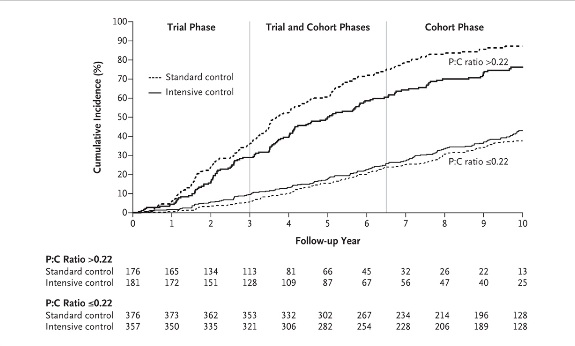
In the recently published long term followup of the AASK trial, African Americans with hypertensive kidney disease who were initially randomized to either intensive or standard BP control were subsequently followed in a cohort phase in which the BP target was the same in both groups. Followup extended out to 12 years from the initial randomization. The achieved BPs during the trial were 130/78 mm Hg vs 141/86 mm in the intensive and standard groups respectively. In the cohort phase BPs were much closer as expected (131/78 and 134/78 in the intensive and standard groups respectively).

The story is similar to MDRD, among all patients there was no difference in the primary composite outcome of ESRD, doubling of serum creatinine or death throughout the trial and cohort phase. However, in the subgroup with baseline proteinuria of greater than 220 mg per day a significant difference between BP target groups appeared favoring more intensive control.


So no clean randomized prospective data to support the JNC VII target of less than 130/80 in CKD patients. There is a hint from the above subgroup analyses that CKD patients with proteinuria might benefit from having blood pressures controlled to below 130/80. The proteinuria cutpoint at which this might occur is unclear.

It will be interesting to see how JNC VIII, expected sometime later this year, handles the above. Additional information will hopefully come from the randomized prospective SPRINT trial which is looking at systolic BP goals of 140 vs 120 in a large cohort with a reasonable proportion of CKD patients.

A picture is worth...

Often on rounds with medical students or housestaff we will review why a serum creatinine of 0.8 mg/dl in a 40 year old athlete...


may mean a much higher creatinine clearance than a creatinine of 0.8 mg/dl in a sedentary 74 year old grandfather...


due to the much lower muscle mass and subsequent lower creatinine production in the older individual.

The beautiful cross sectional MRI images above are a stunning visual reminder of muscle mass differences that we only guess at from external appearances.

The good news is that aging alone does not relegate one to inevitable muscle mass decline and frailty. The images are taken from an interesting study in The Physician and Sportmedicine examining muscle mass and function in men and women in each of four age categories: 40s, 50s, 60s and older than 70. The subjects were all considered masters level athletes engaging in training exercise 4-5 times per week.

In these individuals muscle mass and function did not decline with age though they did gain body fat. Compare the muscle area and appearance of the 74 year old sedentary male above to the 70 year old male athlete below...


The lesson: Stay active, keep your kidneys healthy and keep that creatinine of 0.8 mg/dl reflecting the same creatinine clearance at 70 years old as it did at 40!

In a Few Words

“A doctor, like a writer, must have a voice of his own, something that conveys the timbre, the rhythm, the diction, and the music of his humanity, that compensates us for all the speechless machines.”

-Anatole Broyard
Intoxicated by My Illness

It's funny how small the world is. In this month's In a Few Words in AJKD two of my former colleagues have a beautifully written piece on Advance Directives and the challenges they sometimes present.

The piece reminded me that I've been meaning to write something for Dena for a while but always seem to fall short. I always enjoy the section and the well done Podcasts that often augment it. I'm hoping that a little crowd sourcing will help rectify my own shortcomings.

If interested in submitting, In a few Words aims to give voice to the personal experiences and stories that define kidney disease. They will accept for review nonfiction, narrative submissions of up to 1,600 words, regarding the personal, ethical, or policy implications of any aspect of kidney disease in adults and children.

Footnotes or references are discouraged. Any submission which refers to real patients must be either unidentifiable or approved by the patient(s) described. Submissions from physicians, allied health professionals, patients, or family members are welcome.

You can submit pieces for consideration via AJKD’s manuscript handling site.